If You Were Born Between 1955 and 1965, This Blog is for You. Read On.
You came from a lower-middle-class background and worked your way up to reach the upper-middle class. Over the last 40 years or so, you’ve been saving money, cutting expenses at every possible opportunity. You wanted your children to do well in all social circles—well-educated, well-bred, well-behaved.
Now they’re all well-settled, maybe in India, maybe in the USA or Europe, and they’re taking good care of you by sending sufficient money.
But, but… you have forgotten how to spend money.
Frugality has become part of your DNA now. At retirement, you have sufficient funds, but you’re still counting every rupee.
You Have the AC. So Why Are You Still Sweating?
It’s a hot summer afternoon. You’re sitting in your room with your wife. The AC is right there on the wall—installed years ago, working perfectly. But neither of you has switched it on.
Instead, you’re both sweating. The fan is spinning at full speed, but it’s not enough. You glance at the AC remote. Your hand almost reaches for it… but then you stop.
“Bijli ka bill bahut aayega.” (The electricity bill will be too high.)
So you sit. And sweat. And save.
A Life Spent Saving. A Life Not Spent Living.
You’ve spent 40 years working hard. You denied yourself comforts so your children could have the best—the best schools, the best clothes, the best opportunities. You skipped vacations. You avoided restaurants. You patched up old things instead of buying new ones.
And it worked. Your children succeeded. They’re doing well. They’re financially independent. They send you money. They tell you, “Papa, spend it. Enjoy your life now.”
But you can’t. You just… can’t.
Because somewhere along the way, saving stopped being a strategy and became your identity. Saying “no” to expenses became a reflex. The fear of running out of money—even though you have more than enough—still haunts you.
Welcome to the Golden Age: 60 to 75
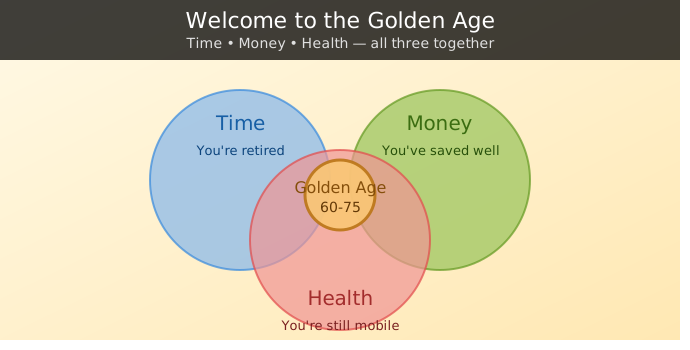
Here’s something they don’t tell you enough: the years between 60 and 75 are now called the Golden Age.
Not because everything is perfect. But because these are the years when you finally have three things together:
- Time (you’re retired or semi-retired)
- Money (you’ve saved well)
- Health (you’re still reasonably fit and mobile)
This combination doesn’t last forever. Your 80s and 90s may bring limitations. But right now? Right now, you’re in the sweet spot.
And yet, you’re sitting at home. Sweating. Counting pennies. Watching life pass by.
The question isn’t whether you can afford to enjoy life. The question is: can you afford not to?
You Forgot One Thing: You Matter Too.
You spent your entire life planning for everyone else’s future. But what about your present?
You’ve earned the right to comfort. You’ve earned the right to turn on that AC. To go out for dinner without calculating the bill in your head. To buy something you want, not just something you need.
Your children are settled. Your responsibilities are fulfilled. The money you saved? It’s there. It’s safe. You’ve done your job.
Now it’s time to live for yourself.
It’s Time to Break Free. Here’s How:
You don’t need a complete lifestyle overhaul. Just small, meaningful shifts. Here are a few places to start:
1. Get Out of the Habit of Living Only on Interest
You’ve built up those Fixed Deposits over decades. You’re proud of them. And now you live off the interest, refusing to touch the principal.
But here’s the truth: that principal is meant to be used.
You’re not preserving it for your children—they don’t need it. You’re preserving it out of fear. Fear of running out. Fear of being a burden.
But you’ve done the math. You know you have enough. So give yourself permission to dip into that principal. Use it for experiences. For comfort. For joy.
That’s what it’s there for.
2. Join That Warm Water Swimming Pool You’ve Always Wanted
You’ve walked past it a hundred times. You’ve thought about it. Dreamed about it, even.
A warm water swimming pool—good for your joints, your back, your overall health. A chance to stay active, meet people, feel alive.
But every time you inquire, you stop at the membership fee. “Rs 30,000 a year? Too much.”
No. It’s not.
What’s too much is spending the next 10 years watching your health decline because you were too stingy to invest in it.
Join the pool. Your body will thank you.
3. Plan That Backwater Trip in Kerala You Promised Your Wife
Remember that conversation, years ago? You and your wife, sitting together, talking about “someday.”
“Someday, we’ll go to Kerala. Just the two of us. A houseboat in the backwaters. Peaceful. Beautiful.”
But someday never came. There was always something more important. A child’s tuition. A wedding. A medical expense.
Now there’s nothing stopping you. Your wife still remembers that promise. She hasn’t said anything, but she remembers.
Book that trip. Make that promise come true.
4. Say Yes to the Europe Trip Your Kids Want to Sponsor
Your children have offered. More than once.
“Mummy, Papa, we want to take you to Europe. Our treat. You’ve never been. Let’s go.”
And every time, you’ve said no. “Too expensive. We don’t need it. Save your money.”
But they’re not asking you because they’re reckless. They’re asking because they love you. Because they want to create memories with you. Because they know time is precious.
Stop saying no. Say yes. Let them do this for you.
You gave them everything. Let them give something back. Not out of obligation—out of love.
It’s Not About Being Reckless. It’s About Being Fair to Yourself.
No one is asking you to blow through your savings. This isn’t about being irresponsible. It’s about balance.
You don’t have to stop being careful. But you also don’t have to live like you’re still struggling when you’re not.
Switch that AC on. Take that trip you’ve been postponing. Buy that comfortable chair. Eat at that nice restaurant. Sleep well at night—not on a creaky old bed, but on one that supports your back.
You’ve spent decades making life better for others. It’s okay—it’s more than okay—to make it better for yourself now.
The Greatest Gift You Can Give Your Children? Seeing You Happy.
Your children don’t want your money sitting in a bank while you suffer in silence. They want to see you comfortable. They want to see you enjoying the life you’ve worked so hard to build.
When they call and ask, “Papa, are you okay? Are you comfortable?”—they mean it. And the best answer you can give them is, “Yes, I am.”
Not because you’re pretending. But because it’s true.
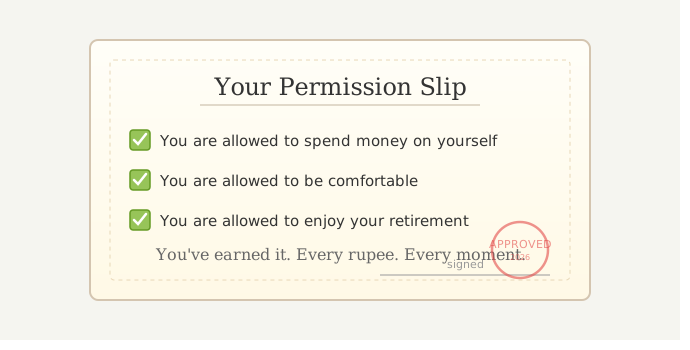
So Here’s Your Permission Slip.
You don’t need it. But just in case a part of you does—here it is:
So go ahead.
Switch that AC on.
What small comfort have you been denying yourself? Share in the comments—or better yet, go do it today.